Improve Water Clarity
Reduce suspended solids, turbidity and particulate matter to improve overall water clarity.
Reliable treatment approaches for improving drinking water quality, controlling unwanted contaminants, and supporting safe and consistent water purification across municipal, commercial and industrial applications.
Drinking water treatment requirements depend on the source water, local water quality, seasonal variation and required product water quality. Surface water, groundwater and municipal feed water can each contain different levels of suspended solids, organic matter, chlorine, taste and odor compounds, iron, manganese and other contaminants.
An effective treatment approach should therefore be selected according to the actual water analysis, treatment capacity, operating conditions and treatment objective rather than relying on a single treatment technology.
Treatment objectives vary according to raw water conditions and intended use, but several requirements are common across drinking water applications.
Reduce suspended solids, turbidity and particulate matter to improve overall water clarity.
Reduce compounds that negatively affect drinking water taste, odor and customer acceptance.
Reduce selected organic compounds, metals and other unwanted substances according to treatment requirements.
Improve feed water quality to support membranes, disinfection systems and other downstream processes.
Drinking water treatment commonly combines multiple treatment stages. The actual process should be selected according to raw water analysis and site conditions.
Remove larger suspended matter and improve conditions for downstream filtration and purification processes.
Use suitable filtration media to reduce turbidity, suspended solids and particulate matter.
Activated carbon and other media can help control chlorine, organic contaminants, taste and odor.
Apply additional polishing or final treatment according to the required drinking water quality.
Different source waters can present different treatment challenges. These are some of the issues commonly evaluated during drinking water treatment design.
Residual chlorine may affect taste, odor and some downstream treatment processes.
Organic matter and other compounds may create undesirable taste and odor in drinking water.
Selected organic compounds may require adsorption, oxidation or other appropriate treatment methods.
Groundwater may contain iron and manganese that affect appearance, staining and water quality.
Dissolved organic matter and other substances can contribute to unwanted color in source water.
Suspended particles can reduce water clarity and increase the load on downstream treatment systems.
Certain source waters may contain metals that require targeted treatment based on actual concentration.
Calcium and magnesium hardness may require softening where scaling or downstream process requirements apply.
Product selection should be based on water analysis, treatment objectives and operating conditions. The following categories are commonly relevant to drinking water treatment applications.
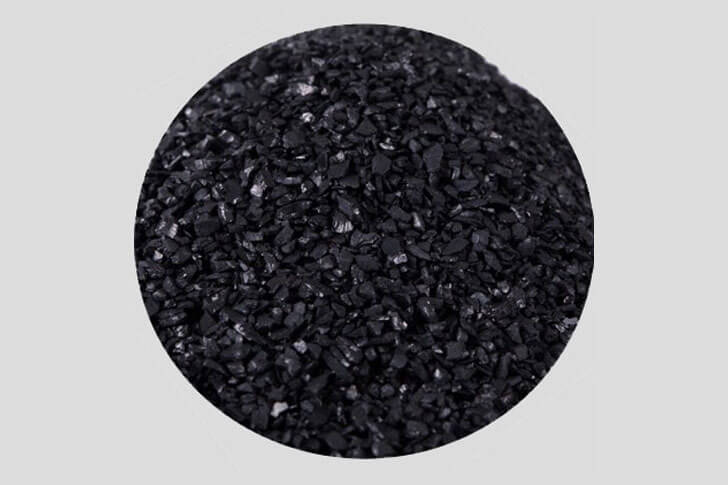
Used for chlorine reduction, taste and odor control and adsorption of selected organic contaminants in drinking water applications.
Explore Activated Carbon →
Filtration media can support suspended solids removal, turbidity reduction and multi-media filtration applications.
Explore Filter Media →
Appropriate treatment chemicals may support coagulation, flocculation, disinfection and downstream process protection.
Explore Treatment Chemicals →Treatment for municipal water supply and public drinking water systems.
Treatment of groundwater containing hardness, iron, manganese and other contaminants.
Treatment of rivers, reservoirs and other surface water sources with variable water quality.
Drinking water treatment for commercial facilities, buildings and centralized systems.
Water quality improvement before food and beverage production processes.
Pretreatment to reduce contaminants and support more stable reverse osmosis operation.
Providing basic water and operating information helps us better understand your application before discussing treatment products or process options.
Submit Your Water Requirements →Surface water, groundwater, municipal water or another source.
Turbidity, chlorine, COD, iron, manganese, hardness and other relevant parameters.
Required flow rate in m³/h or daily treatment capacity.
Target water quality or specific contaminants that need to be controlled.
Existing equipment, pressure, temperature and other relevant site information.
Explore practical technical articles covering activated carbon, filtration media, treatment methods and product selection for drinking water applications.
Learn how activated carbon can support chlorine reduction, taste and odor control, and adsorption of selected organic contaminants in drinking water.
Read Article →
Understand the factors that influence filter media selection, including water quality, filtration objectives, particle size and operating conditions.
Read Guide →
Compare GAC and PAC in terms of particle form, application method, contact characteristics and typical water treatment applications.
Read Comparison →These answers provide general guidance. Actual product selection and treatment configuration should be based on water analysis and application requirements.
Depending on the raw water and required product water quality, drinking water treatment may include pretreatment, filtration, adsorption, softening, membrane treatment, disinfection and other treatment stages.
Activated carbon is commonly used for dechlorination and can also help control taste, odor and selected organic contaminants. Actual performance depends on carbon type, water conditions, flow rate and contact time.
Selection should consider the contaminants to be removed, raw water quality, flow rate, required contact time, particle size and relevant activated carbon properties.
A water analysis, water source, treatment capacity, treatment objective and existing operating conditions are helpful for evaluating a suitable treatment approach.
No. Surface water, groundwater and municipal feed water can have very different water quality characteristics. Treatment should be selected according to the actual application.
Tell us your water source, water analysis, treatment capacity and target water quality. Our team can discuss suitable treatment products and application options with you.